
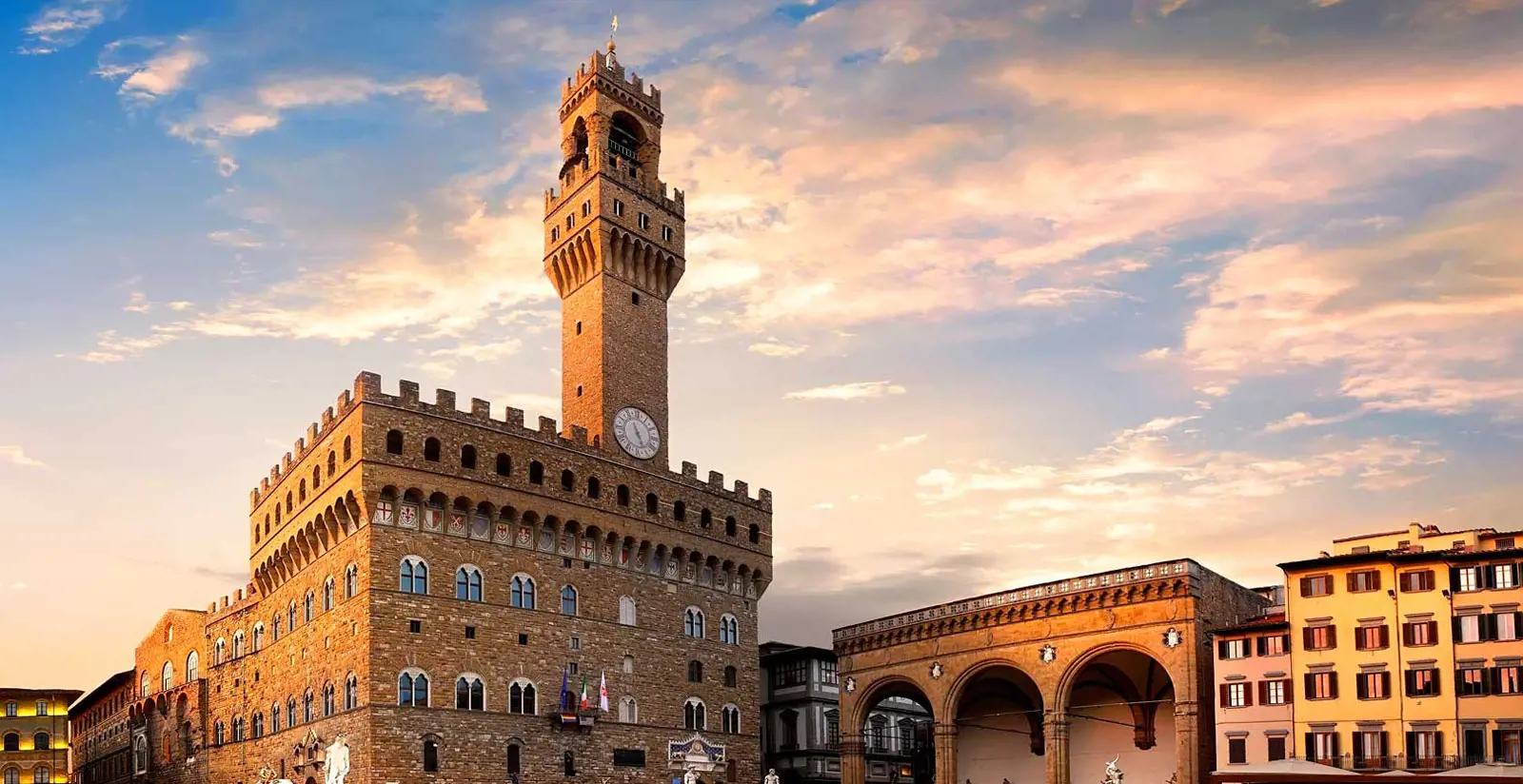
It’s August 2023, 10am, and already 35 degrees in the middle of Italy. Last summer’s heatwave was intense, but that didn’t stop me having a slow, solo wander around the early morning streets of Florence, finding the perfect spot for a caffè macchiato – Piazza della Signoria. There are a few reasons I always find myself back there – rooftop Campari spritzes, obviously, the Caffè Gilli, also obviously, but the number one reason is the eye-watering amount of art and architecture saturating every single corner. Florence is where my love of art history began, and this particular wander reminded me why, as I looked in on the Loggia dei Lanzi, sipping my coffee. I’m the type of person who carries a notebook everywhere, and this post is the result! Bear with me for a brain-dump on my thoughts on what it means to be a Renaissance artist…

To the left of the Loggia is Benvenuto Cellini’s bronze statue of Perseus with the Head of Medusa. The figure stands victorious and dominant, atop the corpse of beheaded Medusa displaying her decapitated head in one hand and brandishing his sword, still slick with her blood, in the other. Grisly, yes, but incredible. Perseus is displayed as the classical heroic figure from Greek mythology, which we all know, but where it gets interesting is how he also represents the political power of Cosimo I di’ Medici, who commissioned the work. This is one of my favourite sculptures and looking at in on this particular day made me think about how we interpret these works now, and really, what it actually means to be an artist. As an art historian, it’s easy for me to pick out hidden meanings or attachments to specific points in political or economic history, but is that what the artist truly intended?
Throughout the 14th -16th centuries, there was a clear shift in what it means to be an artist, stimulated primarily by the cultural and social ambitions of the artists themselves. The Renaissance called into question whether painters, sculptors, poets, and smiths were viewed as master-crafters, or whether they were indeed, true creators, revered for the thought process and meaning behind their work, rather than simply the mastered labour of their craft. For Cellini, sculptor, goldsmith, and author, this was a very present theme in his body of work. Many years after the creation of of Perseus, he authored Vita, detailing with dramatic flair, the process of creating this great work among others, constantly swerving between humbling anecdotes and elevated self-glorification. Cellini’s memoir describes in detail the construction of the Perseus but when you read around this, it makes you think about how the artist is constructed and defined as a self-fashioning presence.
During the time, ideological traits portraying masculinity were symbols of authority and power. Male rulers like Cosimo often depicted themselves dressed in armour or with weapons, like in the original plan for the Perseus. One of the biggest things that sets this statue apart though, is Cellini’s process of creating a motif of blood – a defining feature that lets the statue surpass its rivals. A modern reading of this could be interpreted as a commentary on the identity of political tyranny within the time period, maybe a subtext that Cosimo wanted to display in Florence at the time. However, I wanted to think about Cellini’s interpretation of his brief in relation to his personal goals as an artist. The way Cellini responds to the brief is the first clear example I’ve come across of the “artist” persona, used as a device for constructing a public identity to reflect a set of cultural standards. From general history, we know Cosimo’s plans formed around the medium of bronze, the heroic subject of Perseus and the physical placement of the statue so close to the political centre of Florence reflected his own rise to power as a dominant political leader. While this was the original intent, Cellini actively chose to exaggerate the subject, making it bloodier and more impressive than Cosimo could have imagined, and far more gruesome than any of his peers chose to display in their own work. In working through a reimagined version of his initial brief, Cellini effectively began to glorify himself and his own ideas first, instead of creating the work in response to the larger themes within the political and social economy, originally envisioned by Cosimo. This adaptation of Cosimo’s initial brief to include the actual beheading of Medusa, and not just the aftermath of Perseus brandishing her head, allows Cellini to weave his own personal motives into the sculpture, as well as amplifying the initial goal. When we compare these thoughts with Cellini’s own autobiographical account, it becomes clear that he most-definitely embedded the goal of raising of his societal standing among his fellow artists, as well as defining his artistic identity, or legacy, through carefully curating a meaningful persona in his work.
In Vita, Cellini begins his description of the final moments of creating the Perseus by calling out the workmen of his shop as “[…] traitors! Jealous monsters! This is a malicious plot! [..] I saw all the men I left in the best of spirits standing dazed and at their wits’ end.” They are described as careless, unimaginative, and unable to complete the bronze pouring in Cellini’s absence. He continues, “You are taking in hand a thing which defies the laws of art, and cannot be done, whatever means you try.” This memory of creating the Perseus is really interesting. Cellini not only retrospectively elevates his own skill here, but also elevates the task of creating such a monumental feat of bronze-work, unlike any other work seen before. Through these musings, he made it clear that he claimed his craft was a work of genius, born of divine inspiration. He goes on to describe the glory of his work; “O God, who in Thy limitless strength didst rise from the dead, and glorious didst ascend to Heaven..!” He continues to refer to the work as a miracle, “guided and brought to a happy end by Almighty God.” The sculpture was indeed a feat of artistry, however, what’s fascinating about Cellini’s narrative is the subtle hints littered throughout that his work is synonymised with the work of God, and at the same time admires and diminishes the other great works of his peers.
It’s clear that Cellini was obsessed with his perceived image, and in constructing such a grandiose narrative, he attempted to design his own form of legacy through the concept of being an artistic genius, a one-of-a-kind, placing him in the ranks of his esteemed marble-sculpting peers. This method of self-presentation by Cellini is not dissimilar to Giorgio Vasari’s biographical series Lives of the Artists, from which Cellini is known to have drawn direct inspiration. Though Cellini’s work reads like a thrilling, spur-of-the-moment chronicle of his life, it was written many years after the completion of the Perseus sculpture. Cellini adopted Vasari’s example of heroic biography in Lives (known to be an inflated series of writings describing the lives and works of those he admired), and pioneered a radical act of self-fashioning in the form of his auto-biographical memoir. It could be suggested that the presentation of an idealised self-awareness does in fact allow Cellini to transcend to the heights he desired upon his own text’s creation, as suggested by Michel Foucault in his description of self-identity and discursive formation – he describes the discourse surrounding an author (or artist, in this case), are “objects of appropriation”. Cellini not only used his description of the sculpture of Perseus as a hook for this very purpose, but also the subject of the sculpture itself. The spilling of Medusa’s bronze blood did indeed result in poetry and fame for Perseus. As Perseus rose to mythological fame and glory after the slaying of Medusa, so too Cellini rose, after the creation of his bronze sculpture.
This idea of self-fashioning and subjectivity can also be considered from the placement of the sculpture, within the Loggia itself. If we take a moment to consider the original placement of Michelangelo’s David, alongside Baccio Bandinelli’s Hercules and Cacus at the entrance to the Palazzo Vecchio in comparison to the Perseus, Cellini’s sculpture had to face these great works upon completion, as well as sitting alongside Donatello’s previously cast bronze Judith and Holofernes. The task of filling this space maybe encouraged Cellini to make the Perseus – in his mind – bigger, and more challenging in the face of his peers. The placement not only showcases Cellini’s master craftsmanship compared to Donatello’s earlier work, but also as an artist through creating the perfect form of the Perseus, compared to the probably one of the most famous sculptures in history, the David. Cellini obviously took great care in cultivating his admiration of his peers, before actively seeking out ascension beyond them, both in skill and in legacy.
I honestly love exploring these ideas when I’m wandering the streets of a city filled with so much art. Florence literally drips with incredibly interesting art historical anecdotes, and this particular day really reminded me why I love studying not only how art is created, but also why it was created, who it was created by, what life was like in that particular place at that particular moment, and trying to decipher what the artists’ motives were. I hope that one day wandering round a city like Florence, in a daze in the baking heat, captures your interest and imagination as much as it does for me!
Leave a Reply